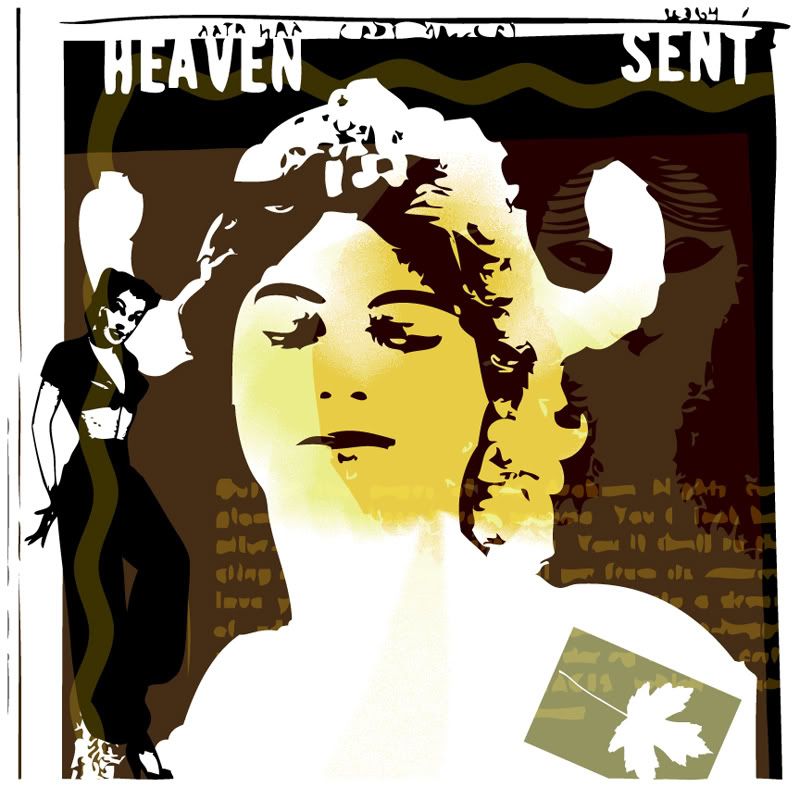
Mata Hari was the stage name Dutch-born Margaretha Zelle took when she became one of Paris' most popular exotic dancers on the eve of World War I. Although details of her past are sketchy, it is believed that she was born in the Netherlands in 1876 and married a Dutch Army officer 21 years her senior when she was 18. She quickly bore him two children and followed him when he was assigned to Java in 1897. The marriage proved rocky. The couple returned to the Netherlands in 1902 with their daughter (their other child, a son, had died mysteriously in Java). Margaretha's husband obtained a divorce and retained custody of his daughter.
Margaretha then made her way to Paris where she reinvented herself as an Indian temple dancer thoroughly trained in the erotic dances of the East. She took on the name
Mata Hari and was soon luring audiences in the thousands as she performed in Paris, Berlin, Vienna, Madrid and other European capitals. She also attracted a number of highly-placed, aristocratic lovers willing to reward her handsomely for the pleasure of her company.
With the outbreak of World War I,
Mata Hari's cross-border liaisons with German political and military figures came to the attention of the French secret police and she was placed under surveillance. Brought in for questioning, the French reportedly induced her to travel to neutral Spain in order to develop relationships with the German naval and army attaches in Madrid and report any intelligence back to Paris. In the murky world of the spy, however, the French suspected her of being a double agent. In February 1917
Mata Hari returned to Paris and immediately arrested; charged with being a German spy. Her trial in July revealed some damning evidence that the dancer was unable to adequately explain. She was convicted and sentenced to death.
In the early-morning hours of October 15,
Mata Hari was awakened and taken by car from her Paris prison cell to an army barracks on the city's outskirts where she was to meet her fate.
Henry Wales was a British reporter who covered the execution. We join his story as
Mata Hari is awakened in the early morning of October 15. She had made a direct appeal to the French president for clemency and was expectantly awaiting his reply:
"The first intimation she received that her plea had been denied was when she was led at daybreak from her cell in the Saint-Lazare prison to a waiting automobile and then rushed to the barracks where the firing squad awaited her.
Never once had the iron will of the beautiful woman failed her. Father Arbaux, accompanied by two sisters of charity, Captain Bouchardon, and Maitre Clunet, her lawyer, entered her cell, where she was still sleeping - a calm, untroubled sleep, it was remarked by the turnkeys and trusties.
The sisters gently shook her. She arose and was told that her hour had come.
'May I write two letters?' was all she asked.
Consent was given immediately by Captain Bouchardon, and pen, ink, paper, and envelopes were given to her.
She seated herself at the edge of the bed and wrote the letters with feverish haste. She handed them over to the custody of her lawyer.
Then she drew on her stockings, black, silken, filmy things, grotesque in the circumstances. She placed her high-heeled slippers on her feet and tied the silken ribbons over her insteps.
She arose and took the long black velvet cloak, edged around the bottom with fur and with a huge square fur collar hanging down the back, from a hook over the head of her bed. She placed this cloak over the heavy silk kimono which she had been wearing over her nightdress.
Her wealth of black hair was still coiled about her head in braids. She put on a large, flapping black felt hat with a black silk ribbon and bow. Slowly and indifferently, it seemed, she pulled on a pair of black kid gloves. Then she said calmly:
'I am ready.'
The party slowly filed out of her cell to the waiting automobile.
The car sped through the heart of the sleeping city. It was scarcely half-past five in the morning and the sun was not yet fully up.
Clear across Paris the car whirled to the Caserne de Vincennes, the barracks of the old fort which the Germans stormed in 1870.
The troops were already drawn up for the execution. The twelve Zouaves, forming the firing squad, stood in line, their rifles at ease. A subofficer stood behind them, sword drawn.
The automobile stopped, and the party descended, Mata Hari last. The party walked straight to the spot, where a little hummock of earth reared itself seven or eight feet high and afforded a background for such bullets as might miss the human target.
As Father Arbaux spoke with the condemned woman, a French officer approached, carrying a white cloth.
'The blindfold,' he whispered to the nuns who stood there and handed it to them.
'Must I wear that?' asked Mata Hari, turning to her lawyer, as her eyes glimpsed the blindfold.
Maitre Clunet turned interrogatively to the French officer.
'If Madame prefers not, it makes no difference,' replied the officer, hurriedly turning away. .
Mata Hari was not bound and she was not blindfolded. She stood gazing steadfastly at her executioners, when the priest, the nuns, and her lawyer stepped away from her.
The officer in command of the firing squad, who had been watching his men like a hawk that none might examine his rifle and try to find out whether he was destined to fire the blank cartridge which was in the breech of one rifle, seemed relieved that the business would soon be over.
A sharp, crackling command and the file of twelve men assumed rigid positions at attention. Another command, and their rifles were at their shoulders; each man gazed down his barrel at the breast of the women which was the target.
She did not move a muscle.
The underofficer in charge had moved to a position where from the corners of their eyes they could see him. His sword was extended in the air.
It dropped. The sun - by this time up - flashed on the burnished blade as it described an arc in falling. Simultaneously the sound of the volley rang out. Flame and a tiny puff of greyish smoke issued from the muzzle of each rifle. Automatically the men dropped their arms.
At the report Mata Hari fell. She did not die as actors and moving picture stars would have us believe that people die when they are shot. She did not throw up her hands nor did she plunge straight forward or straight back.
Instead she seemed to collapse. Slowly, inertly, she settled to her knees, her head up always, and without the slightest change of expression on her face. For the fraction of a second it seemed she tottered there, on her knees, gazing directly at those who had taken her life. Then she fell backward, bending at the waist, with her legs doubled up beneath her. She lay prone, motionless, with her face turned towards the sky.
A non-commissioned officer, who accompanied a lieutenant, drew his revolver from the big, black holster strapped about his waist. Bending over, he placed the muzzle of the revolver almost - but not quite - against the left temple of the spy. He pulled the trigger, and the bullet tore into the brain of the woman.
Mata Hari was surely dead."


 Posts
Posts


